

Details:
Student Team
Starbound.Project
Technology Used
Ansys Fluent, Mechanical, Spaceclaim
Student team:
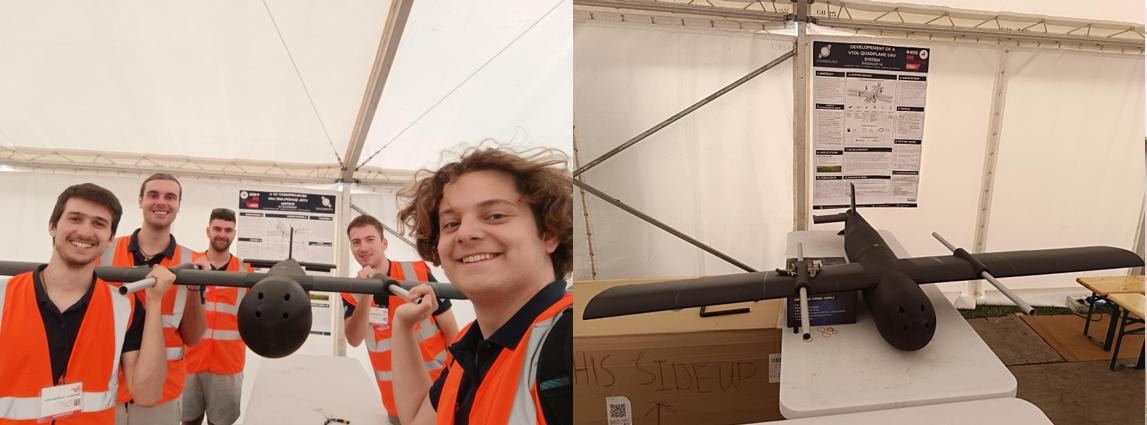
Starbound.Project is a student team of the University of Thessaly, Greece.
The project:
Starbound project optimizes VTOL UAV design with Ansys simulation
Founded in 2024, the 27-member team brings together expertise in aerodynamics, structures, software, and systems engineering to create a high-performance aircraft capable of autonomous navigation and a precision water-drop mission. From the very beginning, simulation has been at the heart of every major design decision.
Solving Complex Engineering Challenges with Ansys
Designing a reliable VTOL aircraft requires more than optimizing individual components; it demands a fully integrated engineering approach.
Using Ansys Fluent, Ansys Mechanical, and Ansys SpaceClaim, the team connected aerodynamic, structural, and stability analyses into a single simulation-driven workflow. This allowed engineers from different disciplines to collaborate using shared engineering data, accelerating development while reducing design uncertainty.
Defining the Aircraft's Flight Envelope
One of the team's biggest challenges was accurately determining the aerodynamic limits of the aircraft's 2.2-meter wing equipped with a Selig S1223 airfoil.
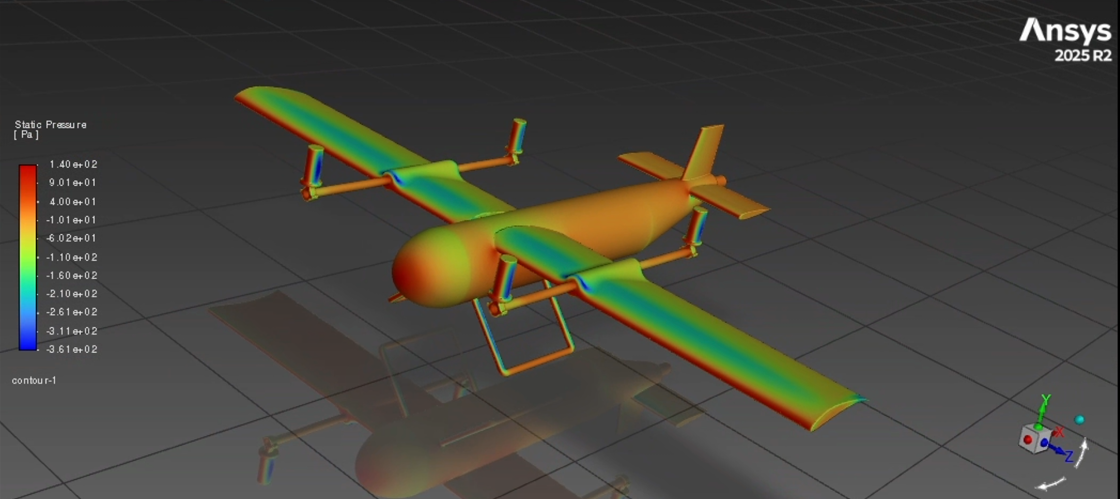
Through Computational Fluid Dynamics (CFD) simulations in Ansys Fluent, engineers evaluated airflow across multiple angles of attack, identifying:
- Maximum lift coefficient (CLmax)
- Stall angle
- Lift and drag characteristics
- Flow separation behaviour
These results became essential for programming the flight controller to prevent stalls while also providing the structural team with accurate worst-case loading conditions.
Designing for Stability and Lightweight Performance
Mission success depended on maintaining aircraft stability before and after releasing the water payload.
Using Ansys SpaceClaim, the team optimized the internal layout of batteries, avionics, and the water tank to align the payload with the aircraft's center of gravity. This minimizes pitch changes during payload release and improves overall flight stability.
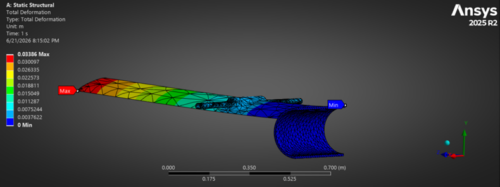
To further enhance performance, aerodynamic pressure data generated in Ansys Fluent was transferred directly into Ansys Mechanical, enabling engineers to perform realistic structural analysis instead of relying on simplified load assumptions.
The result was a wing structure that is both lighter and stronger, with optimized ribs and spars capable of withstanding real aerodynamic loads while remaining below the competition's 8 kg maximum take-off weight.
Accelerating Development Through Simulation
Simulation significantly reduced the need for physical prototypes.
Instead of manufacturing multiple wing configurations, the team validated aerodynamic performance, structural integrity, and aircraft stability digitally before production. This simulation-first approach shortened development time, reduced costs, and increased confidence ahead of flight testing.
Engineering Results That Matter
By combining CFD, structural analysis, and mass-property optimization, Starbound.Project achieved:
- Accurate identification of the wing's aerodynamic limits
- Improved flight stability during payload deployment
- Optimized structural load distribution
- Reduced aircraft weight while maintaining structural safety
- Better collaboration between aerodynamic, structural, and software teams
The outcome is a more efficient, reliable, and competition-ready UAV designed with confidence from the earliest stages of development.
Looking Toward the Future
Following the successful development of Daedalus 1.0, the team plans to further improve the aircraft through multidisciplinary optimization while continuing to use Ansys simulation throughout the design process. Looking beyond UAV competitions, Starbound.Project also intends to expand into rocket development, applying the same simulation-driven engineering principles to future aerospace projects.
A Partnership That Empowers Future Engineers
Reflecting on their experience, the team highlights the impact that simulation has had on both the project and their engineering education:
"Working with Ansys has really changed the way our team approaches design. It gave us the chance to test ideas, understand problems earlier, and make better decisions before building anything physically. That saved us time, reduced trial-and-error, and helped us feel much more confident in our final UAV design. Simtec's support made the whole process smoother because whenever we needed guidance, it helped us get the most out of the software and keep moving forward."
At Simtec, we are proud to sponsor ambitious student engineering teams like Starbound.Project. By providing access to industry-leading Ansys part of Synopsys simulation software and our technical expertise, we help future engineers transform innovative ideas into high-performance aerospace solutions.