

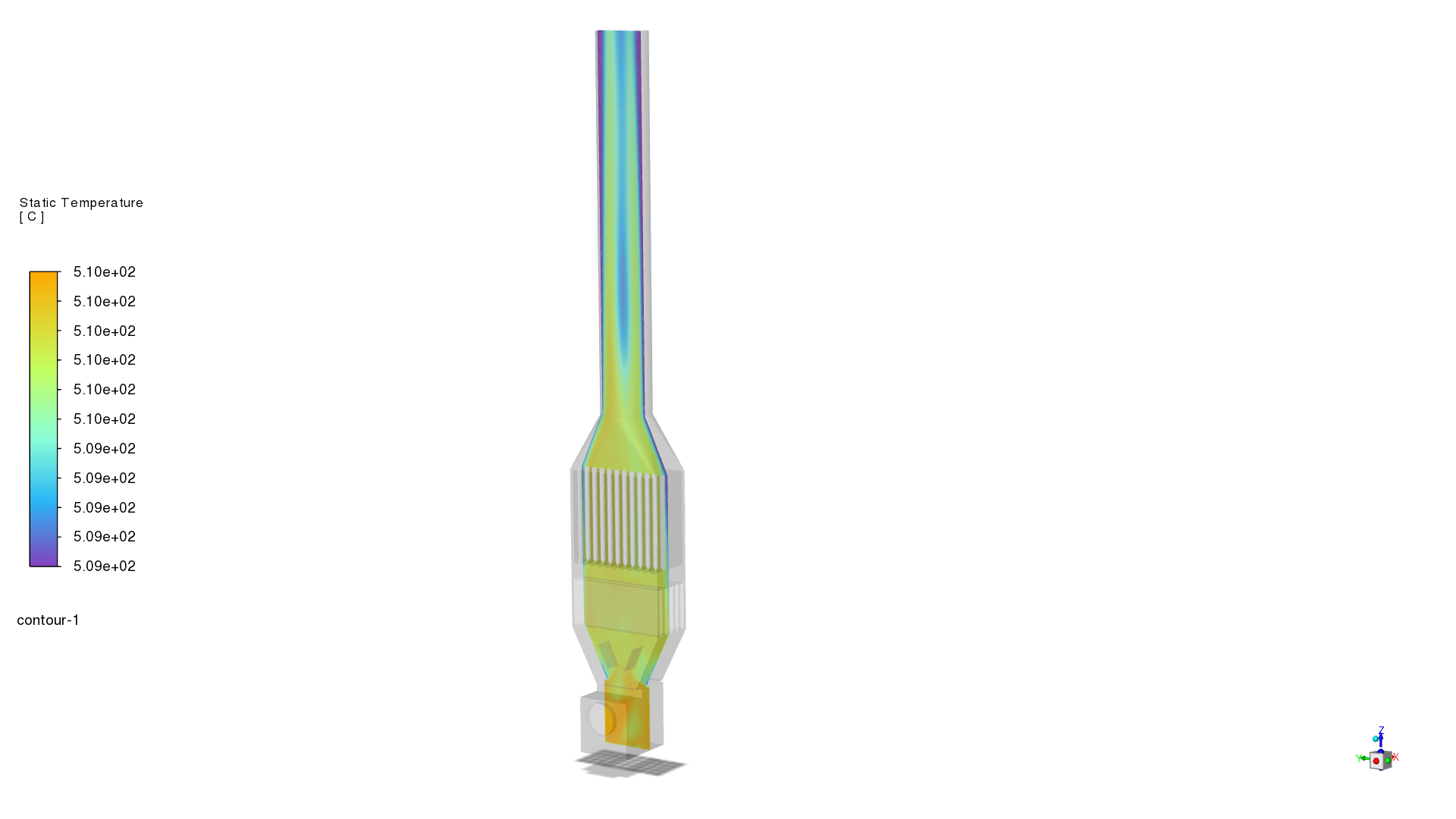
Details:
Technologies Used:
- Ansys Discovery
- Ansys Fluent
- Shell models
Objective:
Assess the thermal performance of the bypass chimney and silencer of a steam turbine exhaust gas system to ensure compliance with applicable temperature standards.
Challenge:
Relevant standards prescribe maximum allowable external wall temperatures for exhaust system components. However, limited experimental data were available for the silencer, which was a pre-purchased, off-the-shelf component. Conducting full-scale testing or replacing the silencer after installation would have been costly and impractical.
Solution:
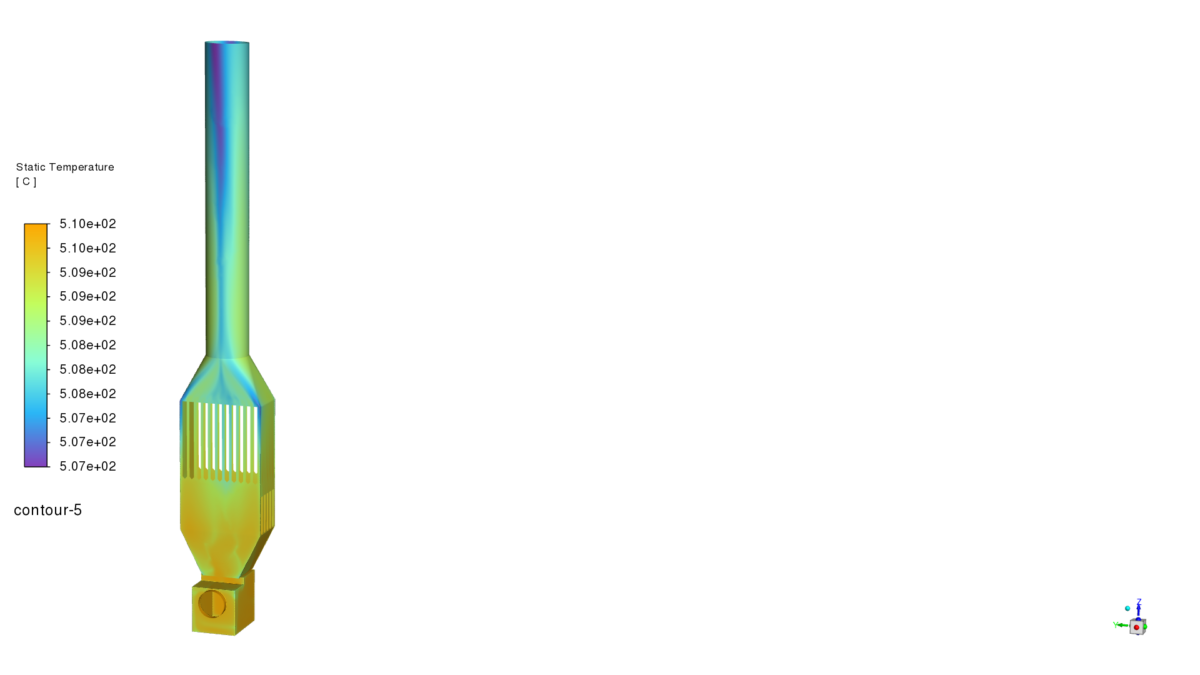
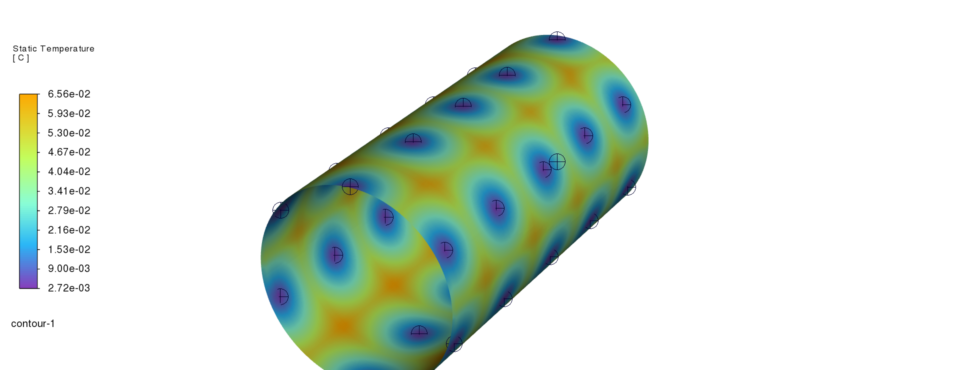
A detailed 3D CFD model of the exhaust gas system was developed to evaluate temperature distributions across the different structural and insulation layers. Conjugate Heat Transfer (CHT) was applied to accurately model heat transfer between the exhaust gas, solid walls, and insulation. Shell conduction modeling was used to achieve a computationally efficient yet accurate representation of thermal behavior, enabling fast evaluation of surface temperatures and potential hot spots.
Conclusion:
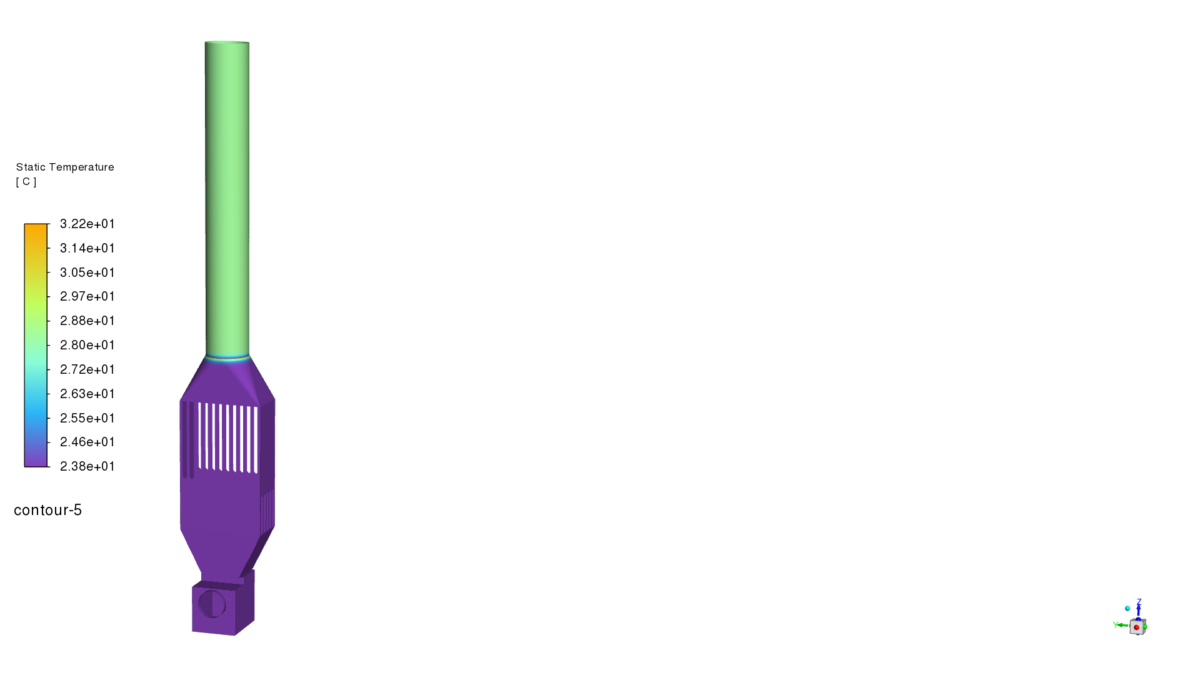
The simulation results demonstrated that the applied insulation concept fully complies with the prescribed temperature limits, and no critical hot spots were identified. The study confirmed that both the insulation design and component geometry were suitable, avoiding the need for costly redesign or replacement.
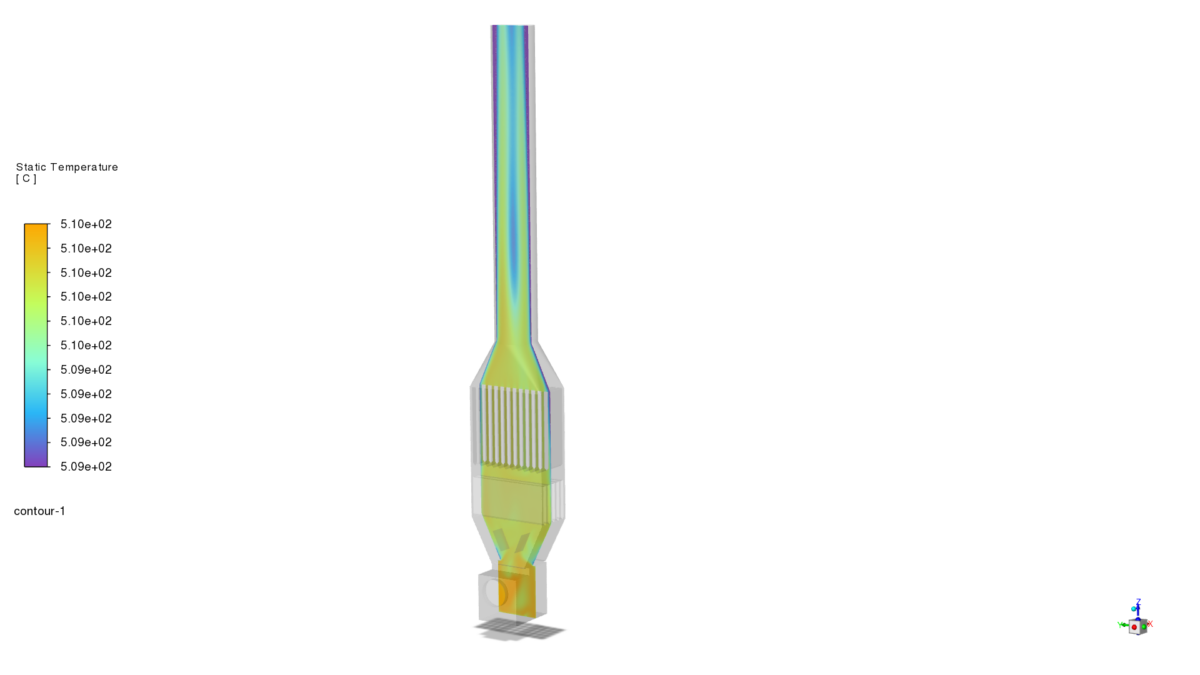
Figure 1: Temperature field in the chimney
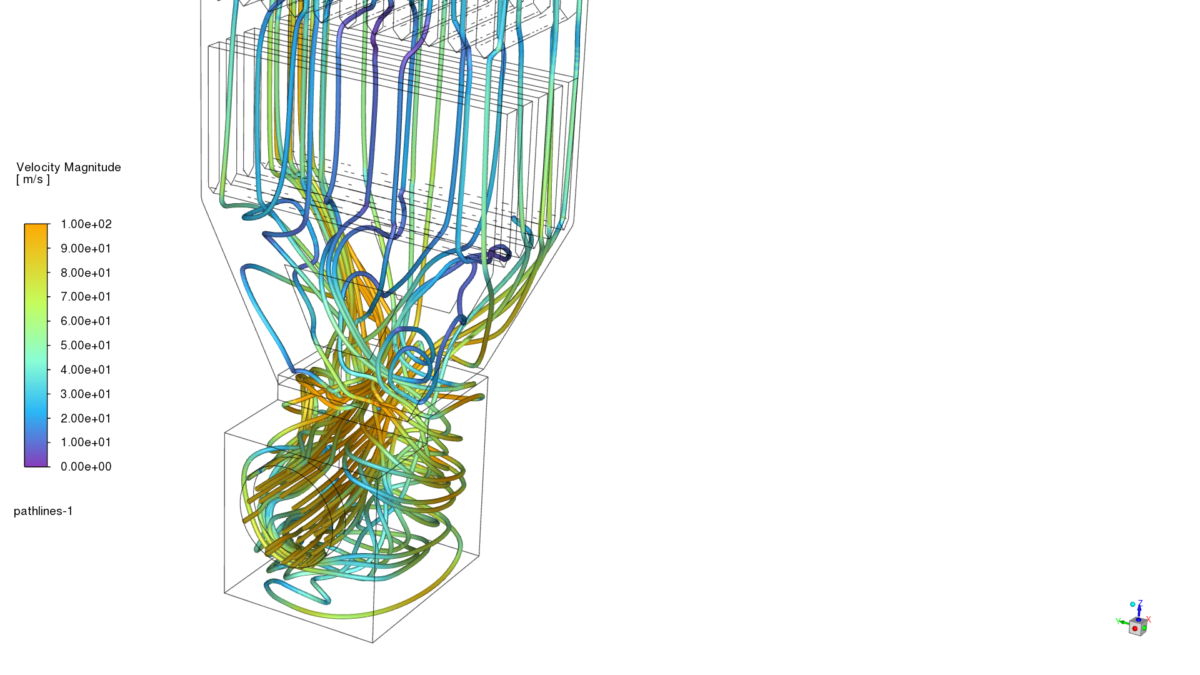
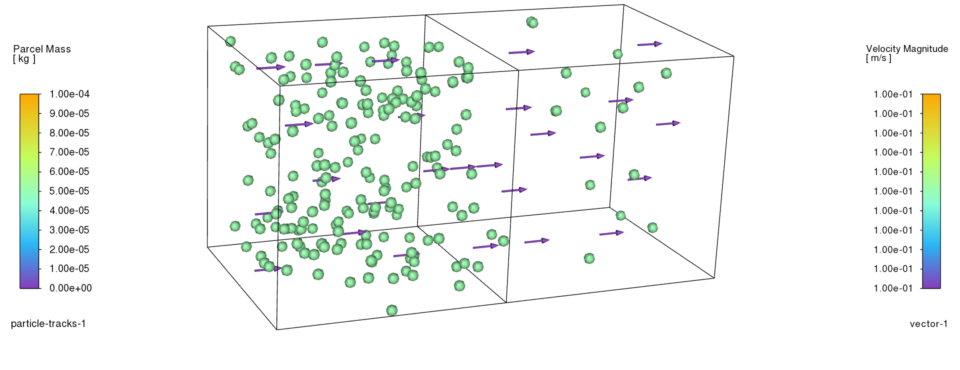
Figure 2: Velocity streamlines in the inlet
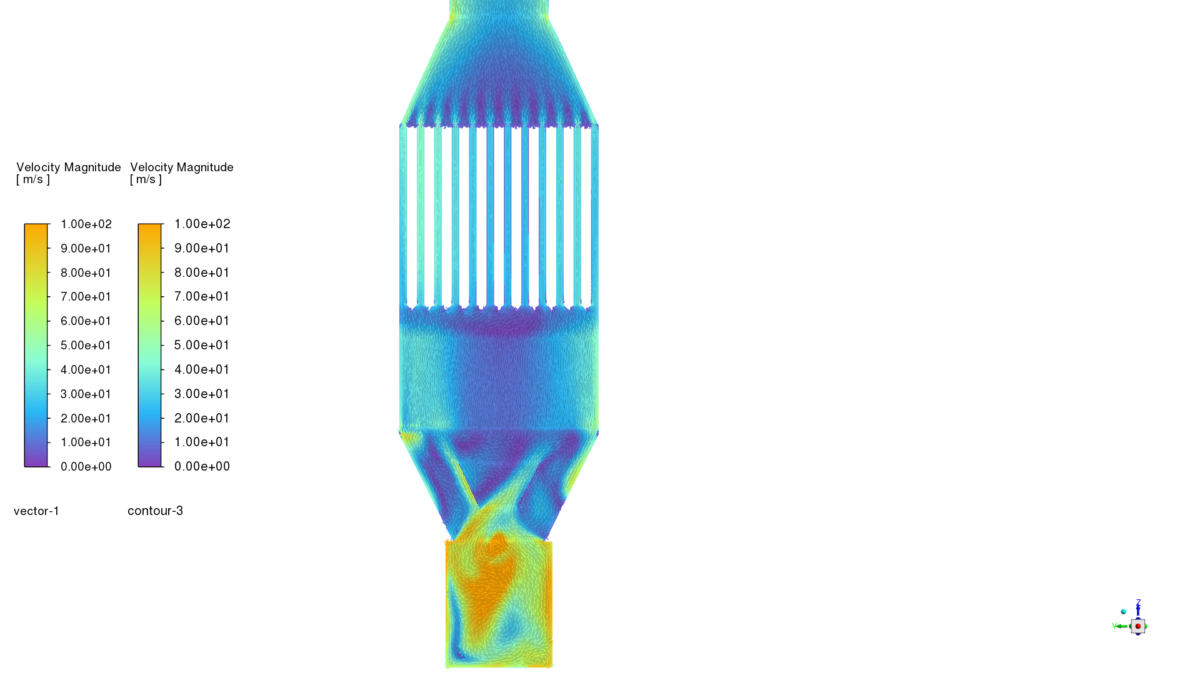
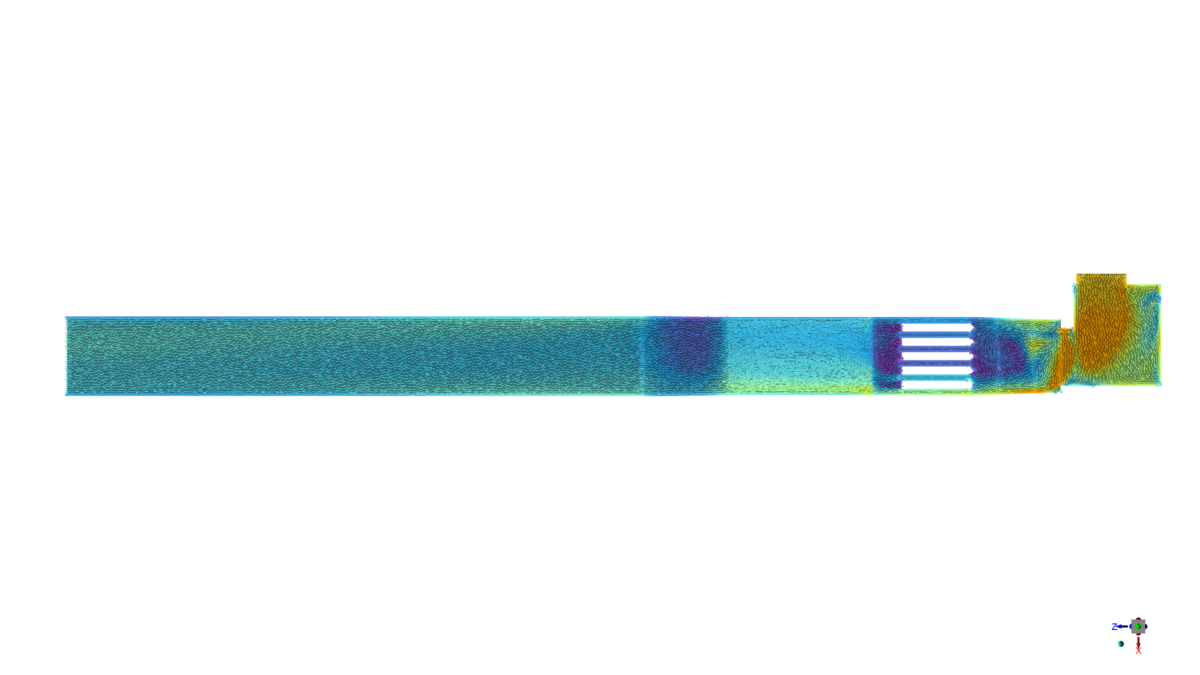
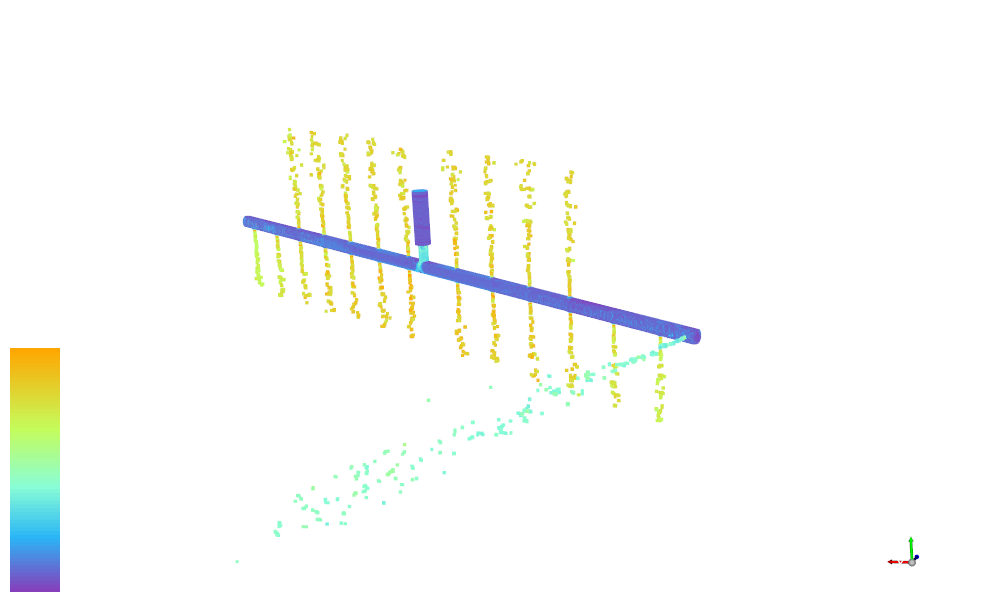
Figure 3: Velocity field in the chimney
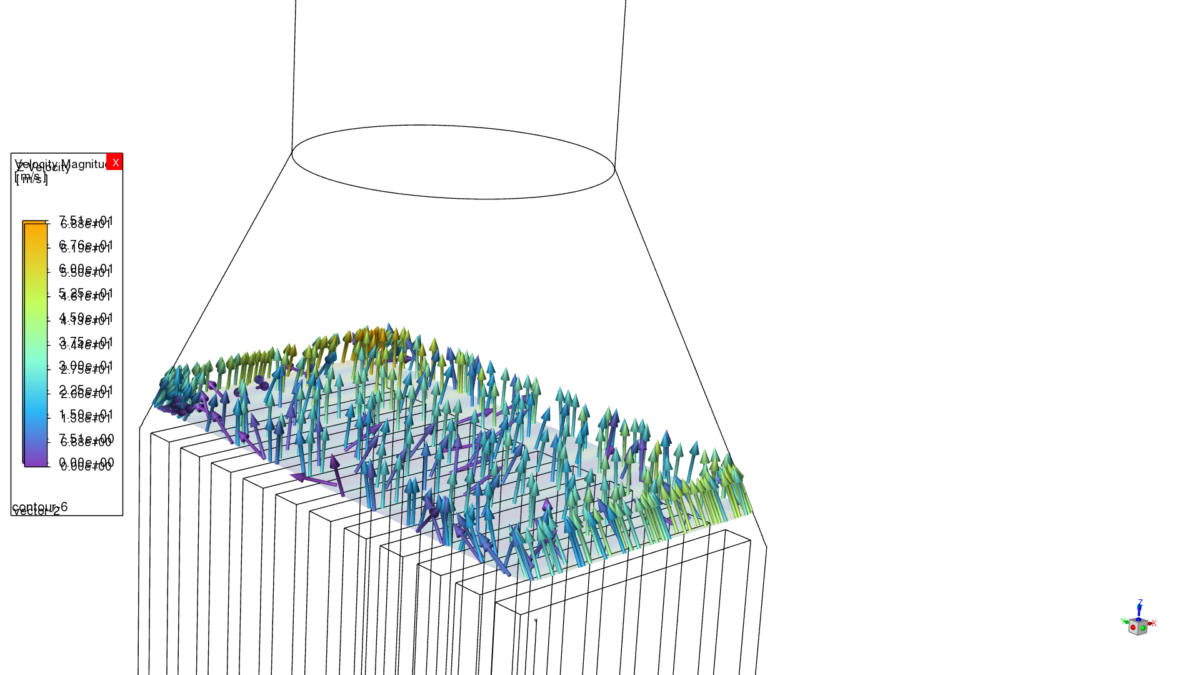
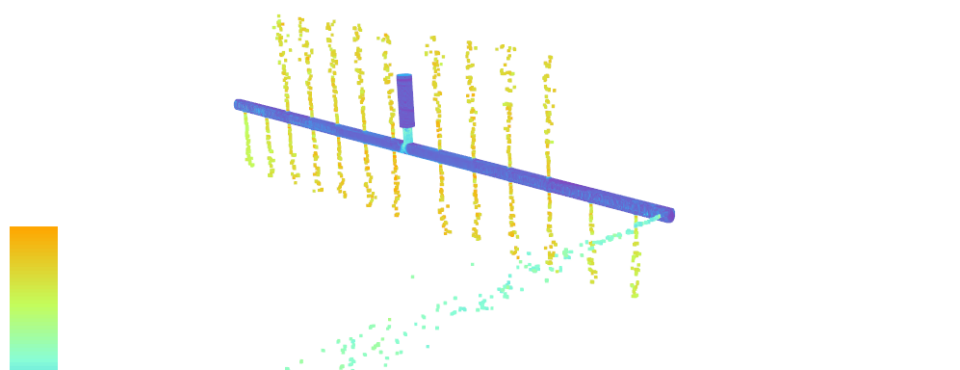
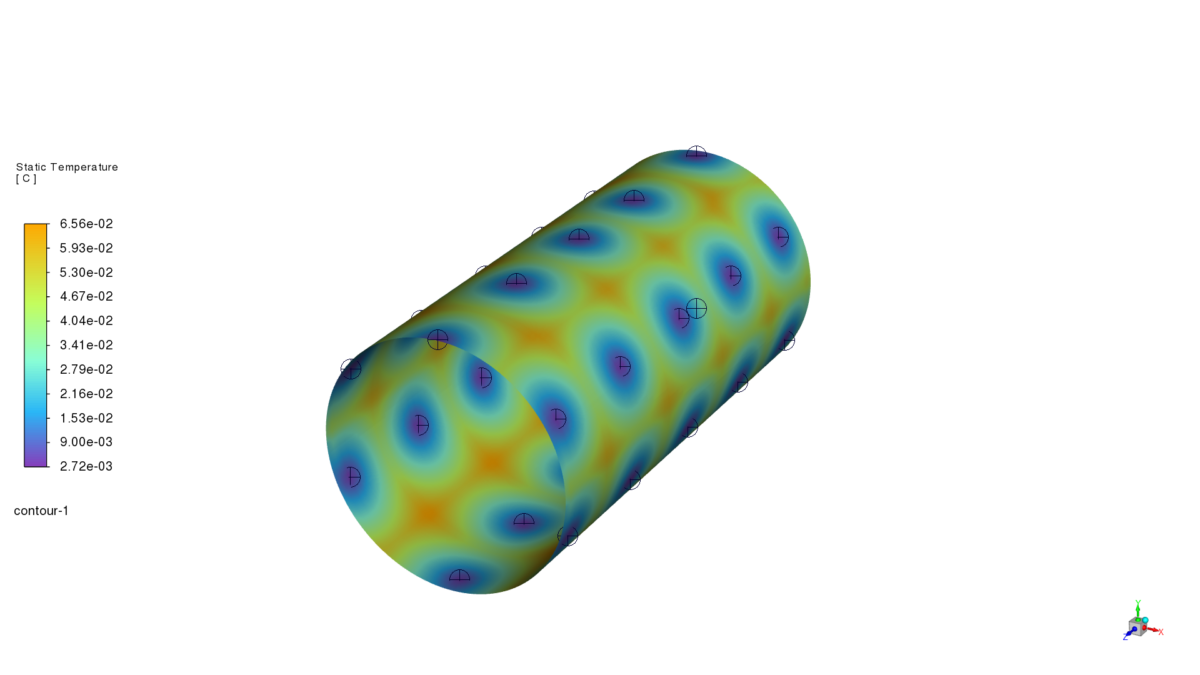
Figure 4: Velocity field after silencer